

In view of the increasing importance of digital security, authentication is the keys to protect the integrity and confidentiality of our personal data. In this blog, the various authentication methods and their specific applications, challenges and future developments are examined. Find out how you can protect your digital identity through effective authentication strategies.
Authentication is the process through which it is checked whether someone or something really is what it is to be. Learn more…
This process can be done in different ways, often by verification of user names and password. To the process …
IN of the rule you need something you know (e.g. a password), something you have (e.g. a security key) or something you are (e.g. a fingerprint).
Definition: authentication
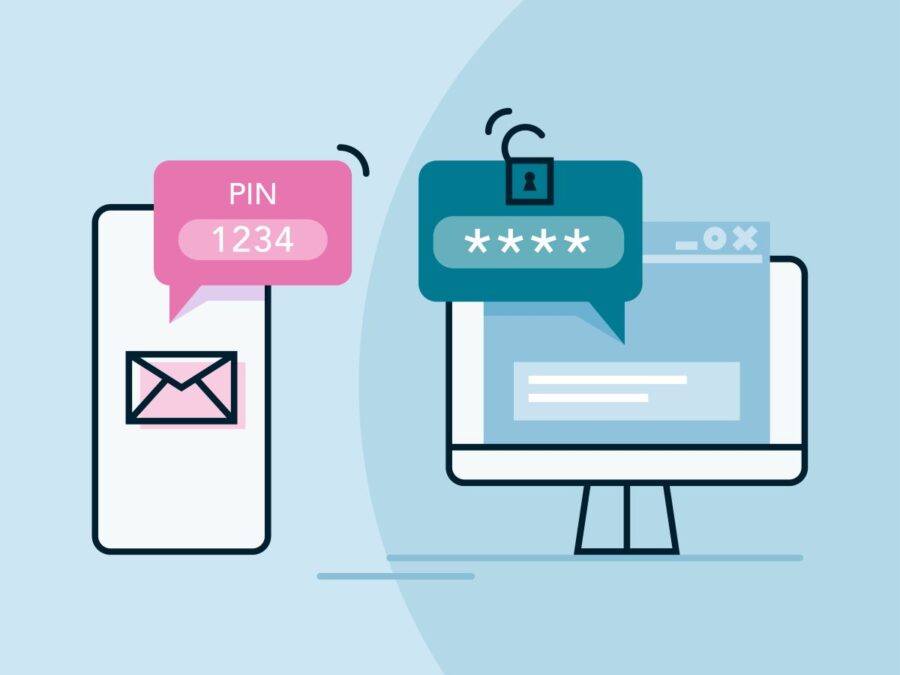
Authentication is a processin which it is checked whether a person, a device or unit is actually the person, the device or the unit that it specifies. This procedure is of crucial importance in safety -relevant processes, especially in the case of the Management of access to systems and data. In the case of authentication, identity is checked by comparing the credentials provided (access data) provided with those stored in a trustworthy data source.
Core elements of authentication
1. Credentials (access data)
These are the information that a user or device presents to demonstrate his identity. The most common examples include:
- Username and password: The classic method of confirmation of identity.
- Security Tokens: Physical or digital objects that you have to have to get access.
- Biometric data: Unique physical features such as fingerprints or face recognition patterns.
2. Authentication server
A server or another system that checks the credentials presented. The Server compares the information provided with the stored datato confirm that they agree. If this is the case, access is granted.
3. Trusted third parties
In some cases, the authentication is carried out by a third party that is considered trustworthy. This can be a Certification be, which exhibits digital certificates that the Identity of a party confirm.
Process of authentication
- Template of the credentials: The user provides his identification features, such as the user name and password.
- examination: The authentication server or a similar system checks the information by comparing it with the stored data.
- Result: If the data matches, access is granted. Otherwise it will be refused and further measures such as alarm or renewed authentication requirements can follow.
Why is authentication important?
The authentication is of fundamental importance for security in digital systems. She ensures that Only authorized users access to sensitive resources Received and serves as the first barrier against unauthorized penetration. In a world in which cyber security is becoming increasingly important, strong authentication for the Protection of personal, financial and corporate critical data essential.
Different methods of authentication
The safety of our digital identity is based on strong authentication methods. In this chapter, four basic types of authentication are presented, which can be used in different combinations to protect data and systems.
Owner -based authentication
Ownership -based authentication requires that a person has something specific physically to show up. This makes it a strong first line of defense against unauthorized access.
Key technologies
- Hardware security token: Devices that offer a time-based, unique password function.
- Smartcards: Cards that are equipped with embedded chips that secure cryptographic information.
Practical application
This technology is often used in safe environments such as government institutions or in physical access control in companies.
Knowledge -based authentication
The most traditional form of authentication requires knowledge that only the user has, like a password or a PIN.
Key technologies
- Password: The simplest and most common form of authentication.
- Security issues: Additional protection, which often serves as a relapse option.
Practical application
This method is omnipresent and is used wherever faster and easy access is needed, as with online services and accounts.
Biometric authentication
Systems of biometrics use physical or behavioral features for identification and, thanks to their uniqueness, offer a high level of security.
Key technologies
- Fingerprints: One of the most common biometric processes.
- Face recognition and iris scans: Highly developed technologies used in security -critical applications.
Practical application Biometry is increasingly being used for personal devices such as smartphones and for access control in safety -sensitive areas.
Multi-factor authentication
By combining several independent authentication methods, multi-factor authentication offers an additional security level.
Key technologies
- Combination of password and mobile tan: Connects something that the user knows with something the user has.
- Biometry plus smart card: Offers extremely high security for critical system access.
Practical application
MFA is used in particular in areas where there are high security requirements, such as in online banking and in the company IT.
Challenges in authentication

One of the biggest challenges in authentication is that Balance act between strict security and user -friendliness. The more complex the authentication methods are, the safer you are usually, but this can also lead to less acceptance among users. Too strict security measures can in practice to frustration lead if the users are burdened by too many security queries or the processes are too slow and cumbersome.
With the spread of biometric and intelligent authentication solutions, the Consideration regarding data protection and security. Biometric data are particularly sensitive because, once compromised, it cannot be changed like a password. In addition, many authentication systems require the Storage of personal data on serverswhich makes it an attractive goal for hacker attacks.
Tipp : Security and user -friendliness must be in a balanced relationship. Companies should consider integrating user -centered designs into their security protocols.
Future of authentication
Adaptive and AI-based systems
The future of authentication will increasingly be shaped by artificial intelligence (AI) and machine learning. Adaptive authentication systemswho are able to evaluate the risk of a registration request in real time are increasingly being used. These systems can Context -related data such as location, time of registration And analyze the device used and thus offer a dynamic safety level that adapts to the circumstances.
Notice: Companies and organizations should remain open to new technologies and at the same time keep an eye on the effects on privacy and legal requirements.
Integration of blockchain technology
Another interesting trend in the field of authentication is the Use of blockchain technology. Blockchain can help, authentication data Decentralized and falsely safe to save. This could increase security and at the same time put control of personal identity data more in the hands of the individual user.
Double lasts better
Authentication procedures are an essential part of the Sichness infrastructure of organizations and individuals. Since the technology is developing, it is important that the authentication methods also develop in order to keep step and to offer protection against increasingly sophisticated threats. Security begins with the right authentication – Make sure you and your company are well prepared.
Sources
(20 votes, average: 4,10 out of 5) Loading…


latest posts published

5k player-love of another audio/video reader

Search Lookeen 10 desktop replaces Windows Search

How to improve battery life in Samsung Galaxy S6

The perfect game pc in the test – What should really be able to do

How many cups of the CPU really need it

What is the modern configuration guest?

Why do memory stick folders appear as shortcuts?

O & O & Partitionation Particione Profession in version 3

How to find the right calendar app
